Audit reveals huge public fund pilferage at RDA
By Staff Reporter
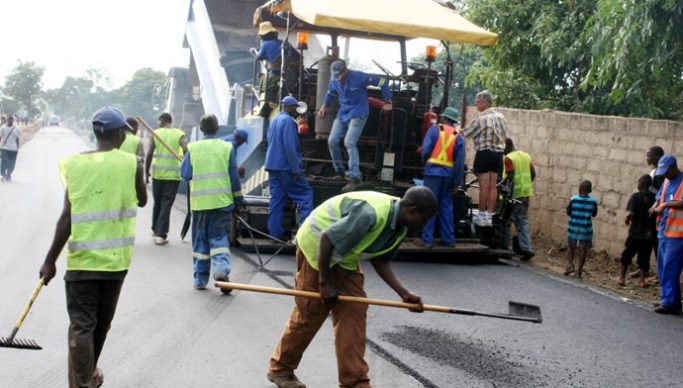
THE five-year multi-billion kwacha countrywide road expansion programme has resulted in colossal losses of public funds three years into its implementation due to poor and clandestine procurements at Road Development Agency.
According to the Auditor General’s Office latest report, there was weak management and clandestine procurements of road contracts at the RDA headed by Samuel Mukupa, a ruling party stalwat.
The report on the road projects under the RDA from the period January 2012 to December 2015 released by the acting Auditor General Ron Mwambwa, cites over procurement of projects, excessive contractual variations, single sourcing of subcontractors, poor workmanship, failure to pay contractors on time and delayed commencement of works as some of the issues leading to this colossal loss and wastage of public funds.
“In October 2012, the government launched the LINK ZAMBIA 8000 project which was divided into (3) phases which would result in the construction of a total of 8,000 km of roads over a five (5) year period. The first phase of the project would cover 2,290 km at an estimated cost of about US$1.5 billion; the second phase would cover 3,049 km of the road network worth approximately US$2.2 billion and the third phase would involve upgrading of 2,862 km of the road network at a cost of about US$1.76 billion,” states the report.
The report further stated that the RDA created in 2002 to manage and coordinate the country’s road network was in 2013 engaged to manage the rehabilitation and construction of 2,000 km of urban roads using concrete paving bricks technology under the PAVE ZAMBIA 2000.
“In this programme, it was anticipated that the cost of construction and maintenance would be lower than the conventional road construction methods of asphalt and surfacing dressing. The project was expected to take five (5) years at a cost of K1.5 billion,” the audit reads in part. “In the Estimates of Revenue and Expenditure for the years ended 31st December 2012, 2013, 2014 and 2015 authorised provisions totalling K19,129,260,577 were made to cater for the roads under the RDA against which amounts totalling K17,516,847,343 were received, representing 92 per cent funding.”
However, the audit observed glaring weaknesses in procurement and management of all the road contracts under the LINK ZAMBIA 8000 and PAVE ZAMBIA 2000 projects.
“It was however, observed that roads were procured at unconstrained levels thereby resulting in cash flow problems which in turn resulted in interest and standing claims,” it was noted. “Thirty two (32) contractors with a contract sum of K11, 675,882,234 were engaged and commenced work prior to the engagement of supervising consultants. In some cases, supervising consultants were engaged as late as twenty-two (22) months after the commencement of works. In this respect, contractors executed works without supervision.”
Contrary to the requirement of a detailed road engineering design, Mwambwa stated, 29 road projects with initial contract sums of K8,011,422,391 were procured and commenced without this vital requirement that is needed to eliminate inappropriateness, error or other defects during implementation and in use.
“The absence of detailed road engineering designs led to preparation of inaccurate BoQs (bill of quantities) which in turn led to variations in the contracts, re-scoping of works and extension of time thereby delaying the completion of projects,” the audit read further. “Guidance from the Attorney General provided that as per best practice all variations shall not exceed 25 per cent of the contractual price. However, there were excessive variations on certain contracts ranging from 50 per cent to 400 per cent.”
The audit also noted that the RDA’s inertia to liquidate about 52 contractors’ claim for payment running into billions of Zambian kwacha resulted in contractors and consultants charging interest on the outstanding claims.
“There was no evidence that the selection and recommendation for award of tenders to subcontractors on all the contracts followed a competitive and transparent process,” the report stated. “Surface irregularities were also observed on most roads with seals. However, despite the contractors not meeting specifications, all payments were made as per specifications in the contract resulting in overpayments, wasteful expenditure and lack of value for money.”